Showing posts with label Operating System. Show all posts

Tips to Fix RunDll Errors

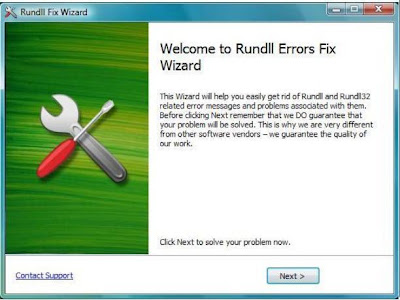
Have you come across error messages about “RunDlls” while running a program or software? Although Win XP and other latest editions of Windows show lesser number of RnDll error. To fix computer problem, you can consult a computer repair service provider.


Before getting into the tips to fix RnDll errors, let’s have a look what these RunDll errors are? Dll files or Dynamic-link library files are operating system files same as exe files used to write smaller programs. These files does not get loaded in the RAM, instead they reside in the hard-drive itself.

In most of the cases, we get RunDll error because of virus infection. The Dll files are infected and made it corrupted. To resolve this issue, the best suggestion is to install antivirus software. Run full scan and make your computer virus free. The next thing you should do is run a registry check with registry checker software. There are many third party software in the market. You can choose any of them.

Is a Dll file totally missing? You can copy it from your operating system CD. Restart the computer your OS will do the Dll file registering. The “regserver32” command is also a very good option for registering the correct Dll file. If still the problem persists, it is better to get in touch with a technical support service provider.

Digital Hygiene To Prevent Virus Infection and Data Loss

Virus in the files, which are downloaded from Internet, is the most growing mode of the infection of a computer. The major objective in avoiding virus infection and need of Data Recovery on your computer is to keep your hard drive clean. Collectivity, such virus prevention methods are known as the digital hygiene. It is collimating the quick growth of the Internet use itself. Installing software, device driver, or software patches from unreliable resources may infect your computer from viruses. Viruses damage your data, applications, and system data structures, causing data loss situations.
You must take precautions to ensure that which files are being stored on your hard drive and exactly what media you are attaching to your system. There are some common ways to prevent virus infection. You should keep in mind the below universally applicable rules of 'digital hygiene':
Garbage In, Garbage Out- It is a very famous computer apothegm, which is very true in several situations both in computer and real world. Your system is infected by viruses only if you allow software to get into your system. Viruses can't spontaneously develop into your system.
More Connections, More Risk- As you increase the number of methods you interact with your computer using storage media and network connections, the chances of virus infection are increased. Shared computers have more chances of virus infection than a standalone computer with stable software.
Piracy Has Some Cost- While the virus infections from the store-bought applications occur, they are very rare. However, freeware and the applications obtained from unreliable sources, have much higher possibility of infection.
Maintain Backups- If you create multiple backup copies of your critical data regularly, it is the “last ditch” of defense against the virus infection. It not only prevents the virus infection, but also saves you from data loss.
However, if you do not create backup and viruses infect your computer, you may lose you valuable data. In such situations, Data Recovery Software are required to get your mission-critical data back.
The Data Recovery applications come equipped with a set of advanced scanning techniques, which perform absolute recovery in all cases of logical data loss. The Data Recovery Software have simple and rich graphical user interface to provide ease of use.
Superior recovery providers have software to handle all data loss situations. The applications are offered for Windows data recovery, data recovery Mac, Mac File recovery, OS X, Linux, UNIX, and Novell operating systems. They are completely safe to use, due to read-only and non-destructive conduct.


Reblog this post [with Zemanta]

What You Need To Know About Macintosh Data Recovery

For those who have their own Mac computer, learning how to do Macintosh data recovery is essential. Everyone who owns a Apple computers
think that they no longer need to worry because hacks and viruses can no longer get to them. But that is not always true because as time passes, viruses will be created. The Mac OS X in particular seems to have many weak spots. This is how data is lost in Macs same way as data is lost in Personal Computers
(PC). The fact that Macs statistically get less viruses does not mean anything. This is because as compared to the PC, there aren’t as many Macs in use out there.
What You Need To Know About Macintosh Data Recovery

Your precious eye candy Macintosh computer is still able to be attacked by viruses and hackers and lots of important data may be lost and destroyed in the process. The Mac hard drive may even crash. Also, some simple mistakes on your part will always lead to loss of data. Then there are also those inevitable physical shocks or damage to the PC that may causes data loss.

In fact when you look inside your Mac, you might be surprised to see many familiar parts that are also being used in any PC. There are viruses that target these specific parts. If that happens, your precious computer becomes infected. There are also specific viruses that will be able to infect specific applications in any kind of OS.

To protect your computer from such kinds of attacks, you should always keep a steady lookout for anything you are downloading as well as watching out for email attachments from unknown people. You should always make sure that you have a working and regularly updated anti-virus program. Finally, always backup your files.

There isn’t much difference between the process of recovering data from a PC and a Mac. In both, FAT or NTFS files in the hard drive can be retrieved. When deleting a file unintentionally, you can do a scan for these deleted data. Free data recovery software for Mac is also available online.

There are some data recovery software that is solely for the Mac operating system X. There are also those that have no specialization and can be used anywhere. Just make sure that you get the right one for you computer and for your needs. One can always call the Macintosh customer service in order to inquire on this subject and get leads on it. The manufacturer will of course always have the best of knowledge on these matters.

You should stop using the damaged or problematic computer. Download your Mac Data recovery software somewhere else. You will want to keep that computers data storage untouched so as not to overwrite on your lost file before you can retrieve it.

courtesy: http://www.articlesbase.com/data-recovery-articles/what-you-need-to-know-about-macintosh-data-recovery-1467690.html

How to Recover Lost Data From Apple Mac Computer

Data loss is a horrifying reality that may happen to any computer system, irrespective to the hardware and software configuration. Even the most reliable hardware (Apple Mac) and the most stable operating system (Mac OS X) may fail at any point of time and cause critical data loss situations. In order to retrieve lost data in all such cases, you are required to go for Apple Recovery solutions through reliable and effective tools.

You may lose your significant data from Apple Mac systems due to a number of reasons. The recovery solutions may vary, depending upon the cause and type of failure. You need to first identify the actual cause of system failure and data loss, before your proceed for Apple Mac Recovery. Trying improper recovery solutions may make the situations more worse and lead to further data loss.

The system failures and data loss situations are generally divided into following two categories:

Physical Damage

This type of failure occurs when the physical components of your Apple Mac computers (such as Mac Mini, iMac, Power Mac, Mac Book Pro, Xsan, and Xserve) gets damaged. The damage may occur due to power surges, read/write head crashes, spindle motor damage, disk controller failure, RAID array failure, server crash, natural disasters, and many alike. In all such situations, the system can not recognize your hard drive and thus the stored data can not be accessed.

Data Recovery Mac in such cases is possible with the help of recovery service. It is a personalized service, delivered by experts through safe and sterile environment of Clean Rooms. They use indigenous tools and techniques to ensure safe recovery of lost data. The experts have skills and experience to handle all data loss scenarios.

Logical Damage

The logical system failure may take place due to corruption to logical structure of your Mac OS X hard drives. It occurs due to file system corruption, hard drive formatting, operating system malfunction, virus infection, accidental deletion, and system metadata structure corruption. In these cases, the system may give you some errors message when you try to boot it.

To recover data in such circumstances, Apple Recovery Software are required. The applications are particularly designed to methodically scan the affected storage media and extract all lost, missing, and inaccessible data from it. With read-only conduct and rich graphical user interface, they are safe and easy to use.

courtesy: http://ezinearticles.com/?How-to-Recover-Lost-Data-From-Apple-Mac-Computer&id=3568957

Reblog this post [with Zemanta]

Resolving Windows 7 'Page_Fault_In_Nonpaged_Area' Error

Image representing Windows as depicted in Crun...Image via CrunchBase

Blue Screen of Deaths (BSODs) are common events in Windows operating systems and Windows 7 is not an exception. Such instances usually lead to data inaccessibility and ask for Windows Data Recovery help. Windows BSODs primarily occur due to errors in memory modules, hardware issues, operating system errors, and many similar causes. One of such BSODs is discussed further.

For instance, a Windows 7 might prompt the following blue screen error:

"Page_Fault_In_Nonpaged_Area

Stop: 0×00000050 (0xE41B0E15, 0×00000000, 0xBF88CD88, 00000001)"

The error might prevent Windows 7 from booting.

Cause

Error 0×50 indicates that a page has been requested that is not in memory, an invalid system memory address has been referenced. The possible causes are:

A newly installed hardware that might be failed, generally RAM Defective main memory, video RAM, L2 RAM cache An updated driver Buggy system service Incompatible antivirus software Defective Video Card Memory Corrupted NTFS volume

Solution

Find out the root cause of the problem and follow these steps to solve the problem:

Disconnect or remove the newly installed hardware if any Run system diagnostics to find the troubled module Run Driver Rollback if required Disable the buggy service if any and check for the possible updates Use ' Last Known Good Configuration' option to restore the system to last good working state Disable or remove anti virus software Start the Windows 7 computer in safe mode and swap the GPU Run chkdsk /f /r command to examine and repair the corrupted partition. Also, check for the controller, device driver, and BIOS memory caching like issues.

In case the system remains unbootable and data inaccessible because of Error 0×50, you can opt for a Windows Partition Recovery utility to recover lost data. The applications are most suitable to use when backup is not available. Windows Data Recovery software are disk scanning based products designed to extract lost and inaccessible data. The tools can be used in even cases like partition corruption, formatting or deletion. These utilities are safe to use and easy to operate. Stellar Phoenix Windows Data Recovery is a safe and advanced data recovery tool that recovers lost data in all logical crashes to a Windows based disk. The Windows Partition Recovery software is compatible with Windows 7, Vista, XP, 2003, and 2000. The too provides advanced features, which include RAW File Recovery, Disk Cloning, Disk Imaging etc.


For more Information: http://www.officialwindowsmagazine.com/

Reblog this post [with Zemanta]

Disk Formatting and Partitioning Applications May Lead to Data Loss

A screenshot of Ubuntu 9.04 with GNOME 2.26.Image via Wikipedia

Every computer operating system comes with a number of applications for formatting and partitioning various kinds of hard-drives as well as removable storage media. These tools enables you to create partitions and make the the newly created partitions ready for use, although the capabilities of these utilities are usually rather limited. Disk formatting can also be used to remove hard-drive errors or viruses. Before partitioning or formatting the hard drive, you should always create complete backup of your critical data as these operations lead to data loss. In case if the backup is not updated or not available, you need to opt for Data Recovery solutions through reliable tools.

Over the last few years, several third-party applications (meaning utilities that are not a part of any operating system) have appeared in the market. Such tools expand on restricted functionalities of the operating system and enable you to perform effective manipulation of the hard drive partitions. They offer quick and easy hard drive formatting and partitioning. You can create, manipulate, convert, copy, and rearrange hard drive partitions.
All of the hard drive formatting and partition recovery tools work with hard drive at an informal level. There are strong chances of data loss while using these applications. You need to be careful, to prevent any sort of problems. But in case if you try to change the structure of the existing hard drive, which contains all your valuable data, there are several risks of problems.

Particularly, interrupted disk repartitioning or loss of power while performing sensitive drive operations could make your hard drive partitions in unusable state. You can prevent such cases by using UPS (Uninterrupted Power Supply). The UPS are quite cheap today and as a serious computer users you must always consider using the UPS.

In case if you do not take protective measures and drive partitioning or formatting is interrupted, critical data loss situations occurs. In such circumstances, you are required to go for effective Data Recovery Software to get your valuable data back.

The data recovery applications are particularly designed to methodically scan the affected drive through powerful scanning techniques and extract all lost data from it. Data Recovery Software come equipped with self-descriptive graphical user interface and thus do not demand sound technical skills for assured recovery.

Reblog this post [with Zemanta]

What is a Computer Operating System?

Linux, Windows, Sun Solaris and Macintosh are some of the popular computer operating systems. But do you know who have designed their own operating system and use it on their local machines? So, what is all this fuss about computer operating systems and how to decide which one to use? Before we start taking about operating systems for computers, let us try to understand, what a computer operating system is.

A computer operating system is nothing but system software because of which the software and hardware in a computer can communicate with each other. In short, it is what takes life to a computer. Simply it is the computer operating system, on which you run all your applications. If you want to run certain software in your computer, it needs to be compatible with the operating system that is running in your computer. So much for the purpose of creating you aware of what is a computer operating system. Now that you have some good idea about what is a computer operating system, let us try to understand, how different types of operating systems can be used.

Types of Computer Operating System

Computer operating systems can be broadly classified into many categories. One thing kept in mind is that one particular operating system can fall into more than one category. The classification is based on the features that operating systems have.

Multithreading Operating Systems
These are the operating systems that allow to use different types of the same software to run at the same time. Operating systems like Windows XP, 9X, ME, Vista, windows 7 and Linux are examples of this type of operating system.

Multitasking Operating System
If your computer operating system allows you to run more than one application software at the same time, than it can be classified into Multitasking operating system. The same operating systems that have been mentioned above can be classified as examples of this type of operating system.

GUI Operating System

GUI means graphical user interface. This type of operating systems like Windows 98, XP, ME, Vista, 7 and Linux, which allow users to navigate graphic representation of every process or application are classified into this type of operating system.

CUI Operating System
This type of the computer operating systems, where you need to learn the commands for working with that particular operating system . MS DOS is one of the most used operating system. There is a particular command for each process and to bring in variation to the command, you have switches.

Multi-user Operating System

Multi-user operating systems which allow more than one user to log in to the computer system at the same time and use it; it can be classified as multi-user operating system. Linux is the most common example of this type of operating system, which allows six users to login at the same time and user used the this operating system very easily.